At my last birthday, I turned 49. I never was a whiz at math. I struggled through Algebra 2 in high school, and I believe I took college Algebra twice. I have battled with focus for all of my life (that I can remember). Ironically, I’m pretty quick at simple math, and have learned along the way that the concept of simplification can be quite helpful: i.e., that a more complex math problem, or mathematical computation can be reduced to the simplest form resulting in greater ease of understanding. But at 49, I’m starting to think about things less systematically and more missionally. Put another way; I, like many others from protestant Christian tribes, have thought about faith in terms of a system, or a formula for a very long time. We’ve taught it that way. We’ve not often thought of the gospel, of faith, and of our daily walk as participating in the mission of God.
Our faith walk is a walk each of us walks alone – alone, in the sense of owning the responsibility – each of us. I am asking questions I never asked before and experiencing joy I never could have experienced before now in my walk as a disciple.
It’s taken me a while to come to these thoughts, but I’ve come to believe that many churches around the world have made a math problem out of our faith. My motive in this article is to simply bring about some sober reflection. Let me explain. THE PROBLEM and THE PATHWAY HERE
Drew Ellis
Over the course of time, the church has both oversimplified and overly complicated “church.” We live in a post-Christian world.[1] Anyone living in the world nowadays knows mostly the current world, and is largely oblivious to everything that has contributed to our current context. Today, for example, we “know” all about space flight, genetic fertilization, and routinely use an invisible library of endless information called the internet. Things that are common knowledge today were once beyond our imagination as humans. To know our world without understanding the advances that led us to this point spiritually reveals us woefully ignorant of the processes of discovery and culminaton of the present. All of that is to say we often forget (or never knew) what all factored into our practices and traditions.
By and large, I find that in matters of faith and practice, church-folk have understood Christianity in general only as we have personally experienced things in the 20th-21st century western world. In the spiritual heritage in which I was raised, I was accustomed to a Sunday gathering for “worship”, in which we would convene at the meeting house for a collective assembly of songs, prayers, weekly communion, sermons, and a financial collection. In addition, we would have a 45-min. block of class study time.
In this formula of religious expression, I began to understand the world in terms of a Christianity which was compartmentalized. Church “things” were done at church, rather than a focus on “church” being the church in everyday mundane activities. The church living out the church daily, and participating in God’s mission for redeeming us and bringing us to maturity. Out of that history even developed a plan of salvation. A formula, if you will. Formulas and lists are helpful for categorizing, and sometimes for simplifying discussions; so I get it. I understand how one might wonder that great question, “What must I do to be saved?” – which is the most important thing to ask for every person. Often times we can expect a formulaic response for the sake of simplicity.
Who knows what all has factored into our compartmentalization of church – perhaps it’s a history that viewed it like the silly chart at the bottom of the page, that merited a wife who “sends children to church or Sunday school and goes herself.” Or ideas such as, “she lets husband sleep late on Sunday and holidays.” Clearly segmenting church into a class by itself, which merited/demerited church attendance. There is enormous value in established assembly times and gathering together for the mutual edification of the assembly; but of course, it’s far more than merit or points.
At some point for many people, worship became relegated only to the assembly time, rather than the daily sacrifice of holy living in submission to God. Compartmentalized Christianity is, after all, an easier task than the more daily engulfing story of God being worked out in a disciple’s identity in Jesus. The former great Jewish church persecutor turned evangelist, Saul of Tarsus (later referred to as Paul) said something about this:
“Therefore, brothers and sisters, in view of the mercies of God, I urge you to present your bodies as a living sacrifice, holy and pleasing to God; this is your true worship. -Romans 12:1 (CSB)
The New Living Translation uses a little clearer verbiage, like this:
“And so, dear brothers and sisters, I plead with you to give your bodies to God because of all he has done for you,. Let them be a living and holy sacrifice – the kind he will find acceptable. This is truly the way to worship him.”
The idea of sacrifice has always been connected to worship. Take Abraham as an example. In Genesis 22:5, Abraham told his servants to stay with the animals while he and the boy “go over there and worship[2].” The word worship (in Genesis) is intensely focused in Abraham’s mind; connected to sacrifice. Yahweh commanded Abraham to take his son – the son of promise, born as a miracle in his old age – and offer this son as a sacrifice. As Genesis records the occasion, Abraham was stopped in the process before he killed his son, once Yahweh understood Abraham would faithfully obey. In a similar vein, for Paul, the word in Romans 12:1 means to trulyworship, by living and walking daily in the holiness of God.[3] While this is a different idea than collective worship, it’s easy to see how we might miss the point.
Nobody meant for that to happen… for worship to only be done in an assembly; and many people haven’t really even thought about it. I don’t judge that, and certainly don’t think it was intentional. After all, gathering together is of critical importance according to Hebrews 10:24-25, and it results in power and strength to walk in a way that stimulates holiness in each other. This is simply the way it was experienced for me. The net takeaway was this: we often unintentionally limited “worship” to the meeting house on Sundays or Wednesdays. So how did this become a math problem? How do these concepts over-simplify? Let’s dig deeper.
As the product of repetition, things often become connected to numbers, ratios, and fractions. Frequency breeds metrics. And metrics are akin to the results we seek to understand from any given situation. One thing that greatly concerns me is that through the years – and I mean many years – we have made the Christian faith into a math problem which functions a bit like the scientific results of an equation.
The take–away, the bottom line. Not so much concerned with the formula or process to have a perfect answer, but in terms of the efficiency; the simplifying of the result. The traditional Christian theological formula (regardless of spiritual heritage) typically goes something like this:
God exists… (fact) >In love, humanity and all creation was created >Humanity chose sin; both corporately [Eve and Adam], and actively [as in each subsequent person] >God’s redemptive process seeks to repair the brokenness >Moses brought a law for a chosen people, the Hebrews, as a typological model for God’s desire for all humans >Mosaical law wasn’t perfect; because no person is perfect -> except Jesus of Nazareth, who was God’s ordained contingency for said brokenness >Jesus, then, came on the scene, lived as the perfect substitute for humanity, and died as an atonement for sin, as a perfect fulfillment of Mosaical law, and all Jews and Gentiles can be justified from sin (saved, or be snatched from eternal damnation because of sin separating us from God; not so much an angry God seeking vengeance) >If we accept Jesus as the Messiah, the anointed one of God, we will obey him, emulate his life, and we will be “saved”. >If we become saved, we have past sins forgiven, future sins atoned for as we penitently acknowledge them to God and one another, and we go to Heaven when we die (varying convictions on how and when this happens) as an eternal reward.
I think the list above recounts the Biblical story of God with humanity fairly well; and yet I have simplified it to a list. If one were to dig deeply into each of those topics, it may take months or years to begin mastery of knowledge. We therefore, have a long, and complicated story, though we sometimes simplify it for conversation, or even for the sake of teaching. Having said this, there are so many factors that may influence WHY we think in terms of a simplified, reduced form Christianity.[4] What about the mission of God being one in which we participate as children of God?
Let me make an important distinction here: by “simplified,” I don’t mean concepts that are helpfully simplified because they are highly complex in theology. Helpful simplifications might be referred to, such as Paul’s anthem-like hymn in Philippians 2, “Have this attitude in you that was in Jesus the Messiah…” After all, how can we possibly fully comprehend how the Son of God can become one of us, and bring God into human flesh? Paul takes the pouring out (kenosis) of Jesus from the form of deity “into humanity” and makes a complex idea practical. That’s an example of a helpful simplification.
What I am differentiating here is an oversimplification of bigger concepts that shouldn’t be simplified. Salvation, for example, is a concept that is deep and rich, but not too hard to understand. One may study deep and long to understand it, yet on the surface, it may be obeyed with a continued thirst for that living water. In the churches of Christ, long ago, a pathway to discipleship became a 5-point plan for “getting” saved. It seems sometimes we’ve become so accustomed to reducing to simplest terms that we may ask, “just what do I have to do to be saved?” in a sort of ritualistic approach. Case in point – we have honed in on Acts 2:38 as a process sometimes without understanding v. 36-37 (or the previous 25 verses). We need to find a way to cherish the message without undermining its simplicity and theological significance. The crowd on Pentecost Sunday asked a simple question, “What must we do?” We have sometimes reduced that epic event to a formula which we follow 2000 years later, without having the contextual understanding the Jews had on that day. Again, I’m not opposed to simplification; but I believe over-simplifying has brought about some unintended consequences.
Before we knew it, there were several unwanted, and unintended side-effects of reducing to simplest form:
1. Compartmentalized Christianity = Segmenting off our Christian walk from other aspects of our daily existence (such as the silly graphic on p. 1), not integrating daily as identity. 2. Misconstrued Faithfulness = attendance to the church gathering primarily, but not exclusively as a means of gauging “faithfulness” to God; not gathering for spurring to good deeds, but to safely land away from the judgment of others about our absence. 3. Transactionally/Systematically Oversimplified = The reason for church was that we might fit into a category: saved or lost. Not saved? Oh, you better GET saved!
For most of Christian history, the bulk of humanity was either illiterate or incapable of routine “Bible study” due to a lack of resources. The gospel story was told by word of mouth; by preachers, teachers, and lay persons who were disciples of Jesus. We most likely take that for granted… with all of the superfluous cheap, quick, and even fancy premium Bibles that are everywhere today in print. Tablet, smartphone, computer apps and websites are also teeming with free Bible translations and resources.
It seems to me that we have often read our Bibles with our eyes glazing right over the big picture of God’s story, and laser-focused on the most reduced form: salvation so I may get to Heaven. What must I do to go from lost to saved is a critically important, and Biblical question. But we must re-think the importance of the goal (telos) of God in humanity. But we often just don’t have time these days… After all, it’s the information age, and there are just too many things to read, watch, and digest. Tell it to me simple!
It seems the church has often missed the mark because of this, as we’ve sometimes focused on the results of religion and the Christian faith; because that’s what we do with most everything in life. Results. The Takeaway. Cliff’s Notes. And of course, when we look at results, we often become self-centered: I’ve done what was asked, now let me have my reward.
I think we’re more concerned with a gospel message that tells me some good news about mysalvation from my sins, because after all, that affects me! Before we know it, salvation has all too often been reduced to a transaction, and been simplified for the Christian experience. At the risk of repeating myself, this I’m sure, would never be the intent in learning or teaching the gospel – to reduce to a transaction. It reminds me of the great old baptism hymn O Happy Day which verbalizes the phrase, “’tis done, the great transaction’s done. I am the Lord’s and He is mine.” The story of the gospel is not just about me, it’s about what God is doing through Jesus in the kingdom. What is God trying to do to the world, to reshape it, to redeem it, and what is He building that I’m a part of? Salvation has sometimes been simplified to “what it’s all about” because it’s how each person chooses to respond and be a part of His kingdom reign. However, it’s not just about getting atonement – the forgiveness of sins and being made right; it’s about a revolution in my life starting now; a revolution that changes the way we do everything, in which the king is rightly placed on the throne in all aspects of life. Thy kingdom come, thy will be done on earth as it is in heaven.
At this point you may pause and ask, “wait, doesn’t the gospel of Jesus teach that in salvation we receive atonement for sins?” Without question, it does. But is that all? Jesus said he came so that we might have life and have it abundantly in John 10:10. Not simply that we may have a pre-purchased ticket to Paradise with the Lord out in the far-distant future. How about life now? What’s my value now? What’s the benefit now?
Sometimes, the question is asked: “Are you saved?” Well yes, I am! So that’s it; end of discussion.[5] Without intending to do so, we repeat the Gospel Plan advocated by T.W. Brents in The Gospel Plan of Salvation.[6]His book helped shape generations of preachers over the last 150 years and is still an excellent read. And what has continued is an “easy-believism” of a Gospel story through the years.[7]
Biblical salvation (the study ofsoteriology) is much bigger than getting oneself from lost to saved, and into the correct column of the Lamb’s book of life. I believe we’ve formulaically simplified to its simplest form a “plan” of salvation to be results oriented… not a life-changing paradigm. Not a new creation… but a momentary reprieve from the guilt of our sins by declaring Jesus; or maybe even the fear of going to Hell. The Biblical story tells a story that is much more compelling.
THE POINT
“In the days of those kings, the God of the heavens will set up a kingdom that will never be destroyed, and this kingdom will not be left to another people. It will crush all these kingdoms and bring them to an end, but will itself endure forever. –Daniel 2:44
The Hebrew prophet Daniel, exiled in Babylon, was well respected as a prophet of exceptional talent. He explained a dream to the Babylonian king, Nebuchadnezzar around 580 BC, in which a magnificent statue fashioned from all types of precious substances created a statue of a god-king; representing the greatest kingdom regimes of the earth through time. In the dream, a boulder from a high mountain dislodged and rolled down the mountain, pulverizing this statue into dust. This boulder was to represent a “kingdom that will never be destroyed…” – the kingdom of Jesus of Nazareth, the Messiah son of David.
I believe the gospel of the kingdom of the Messiah is far bigger than just a transaction. It’s more than getting saved. Submission to the gospel of Jesus is a revolution, a revolution not in armies or guns or tanks, but of the heart. A revolution that acknowledges that the way of salvation is the way of living in the kingdom of Jesus every day as a citizen of the highest value flag one can fly: the banner of Christ Jesus. More valuable than Babylonian conquest, or the Roman republic, or even American stars and stripes. Daily citizenship in the kingdom is much more than getting saved from sins and eating a communion packet on Sundays. It is the daily drinking from the fountain of living water, and a daily feasting on his body and his blood as John 6 teaches. By the way, John 6’s context may not primarily be about the last supper, but it certainly makes a powerful meditation passage for the communion of that Lord’s Supper and its true meaning. John 6 is teaching that discipleship is about feasting on the ways, teachings, the spirit, the attitude of Jesus. It must be daily for me, to feast upon the daily bread of His life, and also to see what God is doing in the big picture – of which we are a part. John 6 is no doubt recounting Jesus’ teaching that feasting on the body and blood of the Messiah, every day is the source of true food and drink. What better topic could we discuss around the Lord’s table than this?
THE PATTERN BECAME A FORMULA
To revisit an anchor passage of the new testament: Salvation is not just about getting baptized into his name (Acts 2:38). However, baptism is certainly the beginning; the surrender, the burial, the resurrection, the new birth. The passage in Acts 2:38 is a bit of an institution to itself in the churches of Christ. But in truth, there would be no Acts 2:38, without Acts 2:36. In that passage, Peter made a God-ordained closing statement that ripped the hearts of Jewish listeners on that day:
“Therefore let all the house of Israel know with certainty that God has made this Jesus, whom you crucified, both Lord and Messiah.”
Lord and Christ: Κύριον (kurion), which means Lord or master, and Χριστὸν (christon), which means Messiah, or anointed one of God (both are used in the accusative case, which makes them the direct object). The implication is that he is the benevolent master over lives (as opposed to an oppressive master), and the king that will rule the people. Peter here accuses the people of putting to death the one long foretold by the prophets and God himself; the one whose heel will crush the head of the serpent, Satan. It is this revelation that pricks the hearts of the listeners on that day of Pentecost and stirred them to ask how this might be remedied. “What shall we do?” in verse 37 was a question of desperation. Simon Peter responded accordingly as if to say, shift your allegiance to the very one you murdered. Acknowledge him as the Messiah, and ruler of your hearts.
For some folks, this may be a shift of emphasis. You may ask, are you really saying the gospel is not all about being saved? What I am saying is that there is more to our faith than just being saved and going to heaven when we die. Salvation is bigger than we have to understand, but simple enough that we can. Salvation is about the revolution, our atonement, our justification, our sanctification, and a wonderful new life of joy and peace as a result of surrender to the reign of the Messiah in our lives.
THE PROGNOSIS – now what?
We have to re-calibrate. We have to teach better, more in-depth, more substantial Christian concepts in our churches. Not harder… with more complexity; but with greater clarity and articulation.
The good news of the Messiah is not simply whether or not a person is saved or lost; it is that God has finally ushered in his kingdom, under which all things are enveloped in the life of the kingdom disciple who belongs to Jesus. Salvation is a bigger concept than so many people think. We tend to hone in on justification -> the act of becoming justified; forgiven due to the atoning sacrifice of Jesus of Nazareth, and our self-denying submission to his Lordship. Justification is most certainly foundational to salvation. But salvation was a bigger ball of yarn -say- for Israel than it is for us. For them, it was the kingdom reign assuming the throne of David, a Messiah who saves, who judges, who executes dominion over all in our lives – and ultimately over the earth – due to his reign over the kingdom.
Has Jesus ushered in the kingdom in its fullness? Not quite. For certain, it is not yet fully realized due to the fact that we still have sin, pain, brokenness, and the rule of the Messiah isn’t ALL that exists today. That will come in time; and as far as we can read from scripture, it is yet to happen at some point in the future. Traditionally – formulaically – we might say that on the day of judgment, Christ Jesus will fully redeem and fully establish his kingdom.
The kingdom of Jesus is a kingdom that ushers in a redeemed and restored humanity, a restored means of living beginning from the day of your salvation – your declaration of citizenship. This brings about a restored daily perspective and an urgent passion to communicate this kingdom reign to all who live around us, and all over the world by each of us, because of what we’ve begun to experience. As a part of that divine covenant community, we are to live the ideals of our master so the world may see an alternative lifestyle. A life of hope, faith, and love; an a community that exemplifies that love which reflects our King.
The great commission, as we call it, documented in Matthew 28, Mark 16, and Luke 24 wasn’t only for the 12; but it is for all of the kingdom to perpetuate, so the kingdom will continue to grow with each new human, new continent, new city, town, village, or conversation. Not only is it for his disciples to teach, but also to “observe everything I have commanded you.” Obedience is a key attribute of discipleship to Jesus, as it was for himself to the Father.
TO PUT IT PLAINLY…
To put it plainly, I believe we need to rethink the use of our formula. Salvation, citizenship, and kingdom living are much more than a person getting saved. Notably, the New Testament does refer to “being saved,” but it is never an end in itself; not one that led to simply a far-off after-death experience. Salvation in the New Testament signifies the rule and reign of the kingdom of Jesus in us; that his kingdom may come, and his will be done on earth as it is in Heaven.
Getting saved seems to be a phrase some Christian traditions have grabbed hold of as if it was the end of the story. However, upon reaching the Grecian city of Athens in Acts 17, it was said of Paul and Silas:
“These men who have turned the world upside down have come here too… They are all acting contrary to Caesar’s decrees, saying that there is another king—Jesus.” -Acts 17:6-7
Such a documented statement by Luke surely demonstrates that salvation was a necessary component, but only as it falls into the big picture reign of Jesus’s new kingdom. Kingdom reign isn’t just about a simplified result for eternal reward. It begins now as daily life, daily citizenship, and daily submission in a new normal in the kingdom of Jesus. We want everyone to be a part of it.
So the next time you think of an opportunity to bake a dish, perform a service, or do other kingdom things toward your fellow disciples because of the love you’ve experienced in Jesus, think about salvation in terms of the kingdom reign of Jesus in your actions. In fact, it’s a resurrection. The resurrection of a man or woman who has surrendered his own selfish will to the will of Jesus in their lives for the kingdom (Romans 6 breaks this down so well).
So, is this reduced to lowest terms? When we signed on to be disciples of Jesus, we signed up to die. To die to ourselves, to our lusts, to our whims and selfish motives, and to be resurrected to live with new identity and new values. To be a part of colony of Heaven among the Earth – which is hopeless and void of any Godly value outside of His kingdom.
If there’s a math problem to add up, let’s add up the total sum of what we may be when we completely buy into our value as a new creation in Jesus. That’s a formula I can get behind.
[2] Sacrifice is a concept always connected to worship in the minds of Biblical servants of God (וְנִֽשְׁתַּחֲוֶ֖ה – shachah, or “bow down/prostrate in worship”). The connection to this idea for Paul in Romans 12 is by no means foreign; it is quite literally connected to the idea of submission and holiness to God; to worship is connected to sacrifice. So a daily sacrifice of living obedience is connected, here. https://biblehub.com/hebrew/7812.htm
[3] In Romans 12:1, the word “worship” is the root word latreia (λατρεία, from latreuo, which might be best translated as “service” or “offering to God”. https://biblehub.com/greek/2999.htm
[4] The scientific enlightenment, Deductive Reasoning, John Locke, sir Francis Bacon & “rationalism”… Many things have influenced humanity’s progression in thinking systematically and scientifically along the way. In recent history, humanity started thinking mostly in terms of productivity and efficiency. On top of that, the world WE live in was shaped by scientific exploration; but further still today by the advent of the internet.
[5] My particular tradition even labeled a 5-step plan to become saved “the Gospel Plan of Salvation”, and in subsequent years added a 6th step, which we called “remain faithful” or to walk faithfully. While I believe it is critically important to live faithfully, I believe we’re still missing it by reducing the kingdom of Jesus to steps, lists, or an oversimplified “transaction” denoting saved or lost.
[6] Brents, T.W. The Gospel Plan of Salvation, Guardian of Truth Foundation, Bowling Green, KY: 1987 (originally published in 1874). While Brents’ fine work was about far more than simply the plan of salvation, it is easy to see how the name caught on. His book is a master class in Restoration Movement theological thought on a number of topics related to the kingdom.
[7] Bates, Matthew W. Gospel Allegiance: What Faith in Jesus Misses for Salvation in Christ, Brazos Press:Grand Rapids, 2019, 35.
Education helps us through the confusion of dark days.
In light of the difficult days we’ve witnessed and the racial tensions of recent history, sometimes learning things from another person’s point of view not only changes the perspective, but completely changes our perception of truth. Rarely does it fortify what we already believed by our pre-judged views. I hope you’ll bear with me as I flesh some things out.
I want to tell you, I find that quite honestly the Biblical take on things like interpersonal relationships is so other-worldly that it comes across as radical. Discipleship is never passive, and undoubtedly never legalistic. The M/minor prophets spoke rampantly about the true religion of authentic following of God’s precepts. The prophet Zechariah said, “This is what theLordAlmighty said:
‘Administer true justice;show mercy and compassion to one another. Do not oppress the widow or the fatherless, the foreigner or the poor. Do not plot evil against each other.’“But they refused to pay attention; stubbornlythey turned their backsand covered their ears.They made their hearts as hard as flint and would not listen to the law or to the words that the Lord Almighty had sent by his Spirit through the earlier prophets. So the Lord Almighty was very angry.(Zechariah 7:9-12, CSB)
The Lord was very angry. This was written to people who knew the way God felt about ethics and compassion. I think people are the most REAL to people who they perceive don’t matter, don’t you? It’s the disenfranchised that will most likely receive the REAL actions of people based on who they are. Real Biblical discipleship is a radical type of discipleship that submits the heart to another’s Lordship; Yahweh is the one we serve due to the obedience and sacrifice of Jesus. We followers of Jesus must be ones whose allegiance is to Him first, and never subservient to a political party, a church platform, or a regional or cultural more. Our allegiance is to the God above, who created all things as good, and desires the unity and communion of all people’s hearts and minds.
Very often, what happens is that folks on one political/social POLE or the other key in on caveats; “but what about abortion?” “…the breakdown of the home?” “What about gays and lesbians?” “…submission to the government?” “…corporate greed & excessive taxes?” “…the lawbreakers, looters, and rioters?” These are of course important concerns that need to be addressed. Those could all be rabbit trails; but let’s stay on point toward learning from a different point of view. I find in scripture that Jesus often does not answer questions directly. He unquestionably had a position on any conundrum; and what that position was is sometimes crystal clear in scripture, and other times not so evident. He would often respond as any good Rabbi would do, with a response question to the questioner. “Have you not read…” or “What does the scripture say?” Or even, “Does not the law say … love your neighbor as yourself?”
I was preparing for a message to be preached on Sunday, July 5, entitled, “Independence Day: What Will You Do with Freedom?” I came across the speech made by Frederick Douglass on the topic in 1852, “What to the slave is the Fourth of July?”
If this isn’t a shot in the arm to EVERY modern person… it can’t help but demand our attention. A former slave, an intelligent and well-read man, and a leading voice in the battle for abolition of slavery & sparking reform in law and culture.
The problem with each person’s current point of view is this; we often forget what makes now NOW are the things that happened yesterday, last week, and years before. It’s so easy for us to think in irresponsible ways that are self-centered. Everybody’s grandmother passed down recipes, instructions, and ways of doing things… EVERYBODY’S. Or Grandfather, or Dad, or Uncle… And a lot of the time, culture trickles down in the form of one-liners and over-simplified memes. So viewing the world through the lenses of a man the likes of Frederick Douglass is nigh impossible, if not for learning about him, his world, and his circumstances in early American society.
I believe that racism is in fact, systemic; but by that, I don’t mean that it is unanimous. Or that people are always hateful toward those of other racial backgrounds. I simply mean that it exists in ways that people don’t anticipate, and don’t necessarily mean for it to exist. People do it all the time when they classify others with observations in which they lump people into groups. But I also believe that it can be overcome if we WANT to overcome it. If we have a humble spirit and understand we’re all broken vessels, and by His stripes we are ALL healed. No one over another…
We all, like sheep, have gone astray, each of us has turned to our own way; and the Lord has laid on him the iniquity of us all. (Isaiah 53:6, CSB)
Why can’t we let this die? Because we don’t know each other. Community destroys racism. And I believe the best community possible is that of the body of Christ.
In addition to reading the following books, I’ve been watching a few movies (based on the books) written by either emancipated slaves, or runaways. We often just can’t identify with the world because we’re absorbed with the NOW, and we rail or lash out against the people and the past with unkind & insensitive remarks like, “nobody owns slaves today!”, or “What did I do to you?”, or “Civil rights has been the LAW for 50 years.”, etc.
Before long when we learn history, people may stop insisting, “it’s my southern heritage, it’s just a flag of pride,” and they’ll begin to ask questions of themselves; yes, but at what cost? What DID this flag mean? What DID it stand for? How does my pride hurt the community of God?
We can preserve our southern manners, culture, and colloquialisms in some other way.
The quote below is helpful, because most modern day folks (white or black) don’t have the foggiest notion of what life was like in the 1850’s in America. Please just try to read and have some heart for the past.
From Frederick Douglass’s 1852 speech given at Rochester, NY Corinthian Hall
What, to the American slave, is your 4th of July? I answer: a day that reveals to him, more than all other days in the year, the gross injustice and cruelty to which he is the constant victim. To him, your celebration is a sham; your boasted liberty, an unholy license; your national greatness, swelling vanity; your sounds of rejoicing are empty and heartless; your denunciations of tyrants, brass fronted impudence; your shouts of liberty and equality, hollow mockery; your prayers and hymns, your sermons and thanksgivings, with all your religious parade, and solemnity, are, to him, mere bombast, fraud, deception, impiety, and hypocrisy — a thin veil to cover up crimes which would disgrace a nation of savages. There is not a nation on the earth guilty of practices, more shocking and bloody, than are the people of these United States, at this very hour.
This criticism begs the question: what was the church doing while the racism of its day continued on a daily basis, and slavery was justified as a necessary evil of its economy. Knowing the past helps us articulate things now, and here’s one takeaway: the church needs to stop waiting and watching. It should be a visible island within a cultural sea of chaos. One that exemplifies a way forward navigating cultural differences and bringing together people of all races and cultural backgrounds. We are after all, a “royal priesthood” that is the only legitimate means of redemption and peace.
Though the preceding paragraph was a scathing rebuke of the evil of slavery, Douglas didn’t “live” there… his concluded his speech like this:
Allow me to say, in conclusion, notwithstanding the dark picture I have this day presented of the state of the nation, I do not despair of this country. There are forces in operation, which must inevitably work the downfall of slavery. “The arm of the Lord is not shortened,” and the doom of slavery is certain. I, therefore, leave off where I began, with hope. While drawing encouragement from the Declaration of Independence, the great principles it contains, and the genius of American Institutions, my spirit is also cheered by the obvious tendencies of the age. Nations do not now stand in the same relation to each other that they did ages ago. No nation can now shut itself up from the surrounding world, and trot round in the same old path of its fathers without interference. The time was when such could be done. Long established customs of hurtful character could formerly fence themselves in, and do their evil work with social impunity. Knowledge was then confined and enjoyed by the privileged few, and the multitude walked on in mental darkness. But a change has now come over the affairs of mankind. Walled cities and empires have become unfashionable. The arm of commerce has borne away the gates of the strong city. Intelligence is penetrating the darkest corners of the globe.
What fascinating grasp of language, and a remarkable spokesman.
I love what the apostle John has to say about loving one another:
Anyone who claims to be in the light but hates a brother or sister is still in the darkness. Anyone who loves their brother and sister lives in the light, and there is nothing in them to make them stumble. But anyone who hates a brother or sisteris in the darkness and walks around in the darkness. They do not know where they are going, because the darkness has blinded them. (1 John 2:9-11, CSB)
I beg you all – Christians or non-Christians alike – expose yourself to history to understand it. Once we begin to understand the historical context for people, we will start to understand what makes our TODAY the way it is. Love one another, for love is of God (1 John 1).
Please think carefully about what you write, or say, or post, or share. The church is not some nebulous entity that we have a membership card for, but we ARE that which we seek to be… the church. Do we reflect our savior & creator, Jesus? I beg you to think critically about issues. On the other end of the line is a human being, with a life, and history, and aspirations and dreams. Be Christ-like, for God’s sake.
For more info, and thought-provoking material:
Books:
A Sin By Any Other Name, Robert W. Lee (great nephew to THAT Robert E. Lee)
Just Mercy, Bryan Stephenson
Reconstructing the Gospel, Jonathan Wilson-Hartgrove
The Civil War as a Theological Crisis, Mark A. Noll
I GET WHAT YOU’RE SAYING. I’ve heard many people say this over the years. Heavens, I’ve said it myself. But here’s why I believe it is wrong (or at least careless) to use this term “colorblind” when relating to people from a different racial group, along with my proposed solution.
AN OBSERVATION:
** What people mean is probably something like this: I don’t judge anybody based on their skin color.
** What people are usually saying – but probably not meaning – is this: I don’t care about your racial background. Your story is in the past just like mine. Let’s just move along and forget the past.
I’m in a ministry with a passionate black brother who is full of energy, Biblical knowledge, and talent. I often refer to him as the “fireworks” of our ministry, and I’m the – ahem – older one of us. I’m enjoying learning his STORY. Who he is. Where he came from, who his family is, what they believe, what vision and passion he has for our future. And I’m not sure I’ve ever met a more singularly talented individual. But he has a story… and everyone of my brothers and sisters in Jesus has a story.
God’s word says this by the pen of Paul: …you have been renewed in knowledge in the image of its Creator. Here there is no Gentile or Jew, circumcised or uncircumcised, barbarian, Scythian, slave or free, but Christ is all, and is in all. Therefore as God’s chosen people, holy and dearly loved, clothe yourselves with compassion, kindness, humility… (Colossians 3:10-11)
I met an older middle-aged white fellow walking down my street the other day: short, skinny, with a limp. Hair all grown over his ears, puffing a cigarette, and he asked me if I needed any help weeding my flower beds. I even asked if he had a business card, and he gave me a slip of paper which he had written his name and number. “I’m happy to give you a bid to do that work, sir” he said. I kindly told him that I intend to do it, but the weather and schedule hasn’t allowed me to do it yet. I felt the demon of harshness/judgment/bigotry rearing his head. He’s a harmless guy; who may not be well educated, not on top of the financial heap, and not socially savvy. But the man has a STORY that would explain who he is, if I would only get to know it. How dare I look at him and think I’m somehow better than him.
When we say we are COLORBLIND, we quickly cop out. We don’t mean to do it.
In fact, the opposite is true; we mean well. The story of our black brothers and sisters is a deep and powerfully influential heritage. It’s a story of rich culture, triumph, celebration, oppression, and a curvy road that was filled with heinous evils leading to the present time. But you might read this and say, “I didn’t vote for separate bathrooms, water fountains, or neighborhoods.” And of course, hardly anyone today did. But the ugly past is unfortunately ALL of our past. While those days of inequality are largely behind us from a legal sense, institutionally, these things sometimes still occur in society. In its largest sense, I wholeheartedly praise God that Dr. King’s dream is largely realized: that little white boys and girls and black boys and girls in Alabama would be “judged not by the color of their skin, but by the content of their character.” But we have a lot of work to do. When we discount the past and write it off, we show disrespect to the valuable journey of our brothers and sisters who have become who they are BECAUSE OF IT.
Some people may read this and feel they don’t meet this description at all; they truly do embrace others. But what often happens leaves an unintended consequence; we classify by writing-off. We don’t embrace one another. We don’t get to know each other. We don’t understand each other’s stories, each other’s hardships, each other’s unique personhood, family history, and background. We maintain our distinctions, and keep our “other” cultures.
The church is a place of broken-down-barriers, or rather – it should be. It is a place where the love of Christ shines, and the face of Christ is seen in our actions toward one another. Here is my recommendation for specifically Caucasian Americans who long to see reconciliation and equality in fellowship:
Live with a humble, sympathetic tone.
This doesn’t mean WE, as modern white Americans are literally guilty for the evils of our past. But it may mean that we’ve perpetuated them ourselves. Repent of those sins. Put YOUR past behind you, and FULLY EMBRACE your brothers and sisters in Christ. Jesus’ way is the better way; and it is greater than our past… whatever it is.
Learn your brother and sister’s STORY.
This isn’t just limited to racial differences, but all sorts of cultural differences on which we allow caveats to limit our fellowship. “So-and-so is a drug addict. She is a terrible mother.” “So-and-so is a drunk, and he always will be.” “So-and-so is a hot-head and talks to his family in a sinful, despicable way, and doesn’t embody Christ.” “So-and-so is a racist, and he can’t possibly change.” Everybody has a story. There is pain, difficulty, and sometimes habitual sin utilized in trying to cope with the past and the present. Sometimes it’s overwhelming, and the only means of bringing a person out of it is the unquestionable love of Christ being shown to that person.
Clothe yourselves with the character of Jesus.
Put on compassion, kindness, humility, gentleness, and patience. Be long-suffering. We live in a time when that word – and it’s meaning – has become lost to us. We don’t even suffer each other SHORT. I saw a Facebook video from here in town just 2 day ago, where some macho 4×4 driving country boys literally passed a guy and stopped, put it in park, and got out of the truck to walk toward a driver whom they were going to “handle” – whatever they intended to do. The guy slammed it in reverse and drove around them to avoid an altercation. Christ-followers must be the example of mature long-suffering for the world to see.
LASTLY, understand that the story of people is the story of all of us. This applies to both sides of the discussion. The blood of Jesus was shed on the cross of Calvary to wash away the sins of every. single. man. woman. child. who ever walks the soil of the earth.
If I go in the hospital and need blood; I get AB-. I don’t limit that – nor would I ever – by language, race, sexual preference, or any other distinction. I need blood to live. AND HERE’S THE IRONY… One man shed blood for all humanity. To love, forgive, and bring the message of love and life to the rest of the world. We drink it every Sunday and swear to walk in a manner worthy of that calling. But do we?
In a time when the silliest things separate humans, let us in the church unite behind the blood of Jesus to love and forgive. The power of a changed life, and forgiveness of sins is the most powerful emancipation of all history. Being shackled by hatred, bigotry, and judgmentalism has caused more problems than the world can ever count.
I beg you to consider these words, and consider using language of adoption. The church is a collective of sanctified people, who have all been fixed of their brokenness. Adopt your brother and sister as YOUR OWN. Let’s not perpetuate the evils of the past by continuing to sin; “Let the peace of Christ rule in your hearts, since as members of one body you were called to peace.” (Colossians 3:15)
What is the abundant life? Placed in its appropriate context, the discussion of John 10 takes place on the heels of a miraculous healing that Jesus performed on a guy who had been blind since birth. The Pharisees (religious elite) were put out by Jesus over this whole thing, and couldn’t believe that such a thing could happen (understandably). So Jesus’ teaching in chapter 10 is directed at holier-than-thou, “we’re the religious chosen ones” believers in God. People who in actuality were NOT in the fold of God based on their hardness of heart and arrogant spirits, and that is clear in John 10.
The most amazing thought that came to me in preparation for this message was that of pasture. On occasion, I drive the 40-minute trek up Colorado Hwy 36 to Estes Park, and use my annual pass to go up into Rocky Mountain National Park. I am uplifted every time I go, without fail. Something captivates me about not only the wide-open spaces, but the vast wilderness that is lush, cut by rivers and streams, teeming with life of beasts, birds, fish, and flowers, and surrounded by the majestic peaks of the Rockies. When I think of Jesus as the Good Shepherd, I cannot help but envision the sheep following him through those fields and open spaces, and they find pasture.
In pasture, the sheep can frolic and play. They can graze and feed, drink a fresh drink from the clean mountain streams, and they have the protection of their shepherd. He protects from the beasts; primarily wolves and coyotes, bears and mountain lions, but anything else that might come about looking for them. Dangers are unpredictable, so the shepherd must be well prepared and sufficient to protect, which Jesus completely does.
And then he says, “I lay down my life for the sheep.” And he says, “I have authority to lay down my life, and take it up again.” And the Good Shepherd does more than contain us in a pen. The Good Shepherd does more than contain us in buildings. The Good Shepherd leads us to pasture. He came that the sheep might have “life, and have it more abundantly.”
And then there’s that… abundant life. Abundant life has nothing to do with STUFF. Nothing to do with wealth, or riches; cars, houses or clothes. Abundant life means having relationships whose value surpasses the wealth of kings. It means having peace in your heart from following in faith – in pasture. Abundant life is a faith-filled existence that values trust in God more than financial stability, more than your own pride, or even our own accomplishments. Abundant life might mean one thing to one believer, and another to me. But I know this: it means more than coming to church on Sundays; more than singing songs, bowing for prayers, and eating communion. It means living every day with a definitive purpose to reflect God’s holiness, and to live life to the fullest, all-the-while looking over our shoulder to make sure the Shepherd is still there. He will protect us. His direction is what guides us.
It’s ironic that the pasture provides nourishment. In John 4, and in John 6, Jesus teaches both an individual, life-is-a-mess woman and also a group of Jews who were following him for food. He taught that HE provides the living water, and his flesh and blood provide REAL sustenance. Metaphors aside, I pray that you will meditate today on what it means to partake of Jesus’ living water, of his flesh and blood, and what nourishment HE provides.
pasture
“I have come that they might have life, and have it abundantly.” Are you living an abundant life? Another great passage of scripture yields light on this concept: Romans 8:6-11.
6 “For to set the mind on the flesh is death, but to set the mind on the Spirit is life and peace. 7 For the mind that is set on the flesh is hostile to God, for it does not submit to God’s law; indeed, it cannot. 8 Those who are in the flesh cannot please God. 9 You, however, are not in the flesh but in the Spirit, if in fact the Spirit of God dwells in you. Anyone who does not have the Spirit of Christ does not belong to him. 10 But if Christ is in you, although the body is dead because of sin, the Spirit is life because of righteousness. 11 If the Spirit of him who raised Jesus from the dead dwells in you, he who raised Christ Jesus from the dead will also give life to your mortal bodies through his Spirit who dwells in you.”
Quit living your own way. Life for pasture. It’s the only way to achieve peace.
Almost without exception, the Facebook posts I read today have to do with “Never forget!” or “Always remember!” (Pessimist/Optimist views). The events of September 11, 2001 will be hard to ever forget for those of us who were adults on that day. I’ll never forget that it was a CRYSTAL clear, bright blue perfect sky in Memphis, TN that day. I was in the middle of Greek class with Dr. Allen Black at Harding School of Theology; wondering, “how can a perfect day yield such terror?” The hallway became all abuzz about the events of the morning, and we had to break from class and find a TV to see what was going on.
What is it that we remember? What is it that people want us to remember? Is it “never forget that psycho Muslim jihadists attacked and murdered our people?” or is it, “never forget that that day will live as a perpetual alteration to the ease of our travel and security” or something else? Different people have differing motivations to remember, I suppose.
What is it we want to remember?
It occurs to me, that for disciples of Christ, our memory is so often a selective one that it would behoove us to stop and think about just WHAT we want to remember. Things like the events of 9/11 leave life-long prejudices against other people. Sometimes, Christians jump on the National Patriotism bandwagon and wave the Stars & Stripes without reflecting on some important things. My grandfather, for example, died at 83 believing that Japanese people were mostly traitors; devilish kamikazes who destroy innocents and have no real regard for human life. Obviously his worldview was painted in part by the events of December 7, 1941, the first day that “will live in infamy.” He was a deeply devoted Christian. But was his perception of all Japanese accurate?
What about Muslims? What about Muslim Jihadists? Our world is mostly different now, post 9/11, that’s for sure.
But what about the most violent, evil day in human history? What about that day that the people of God – the Jews – took the son of God and brutally murdered him – one LESS THAN deserving of death… in fact, totally deserving worship, honor, and praise – they betrayed, murdered, and hated him. Their claims and evidence were completely thin, clouded by the red cloud of fury and hate. If you’re reading this, you might wonder, “why the sudden change of subject, Drew?”
It’s all about perspective. BECAUSE Christ died, I can remember the world, and world events through a different lens. Because Christ suffered, I can learn what it means to love my enemies and “pray for those who spitefully use you.” BECAUSE Christ lived, I have hope and longing for the day that our re-creation into something better is possible. BECAUSE I remember Him, I am motivated to love, and not hate for others, even though some people may be full of ignorance, bitterness, and wrath. BECAUSE Jesus taught about humility and service as the means of achieving true greatness and “status”, I am motivated to love and serve even those who might betray me brutally, such as Judas did to Jesus. And YET, Jesus washed his feet that night (John 13). What was HE thinking? Knowing full well that his betrayer was sitting there, and he washed his feet. Was he extra rough with Judas’s feet, knowing what was about to happen in a few hours? Did he wash them extra thoroughly? Was he even more kind than usual?
9/11 was a day that forever changed the world. Much less, America. There have been brutal days in world history that probably equally deserve a “never forget” graphic. I was fortunate to be able to go to NYC about 2-1/2 weeks after the attack. I saw the rubble. I smelled the air – the burning metal, wood, materials, and flesh – most of the burnable materials had already been consumed by that point. For the love of Christ, we took 3000 care packages from Searcy, AR to NYC Fire houses, and distributed some love to those people. Prayer was powerful, and I will never forget that experience of standing there, watching workers, seeing the despair, listening to firefighters tell me stories like, “see that guy right there? He’s a walking miracle.” I believe Christ motivates us to view the world in three ways:
View the world as POST-Christian. That is, we live after Jesus, and if we’re in Christ, we benefit NOW (and later) from the sacrifice of Jesus. His teaching changed it all.
View the world as broken. People make poor choices, and ultimately hurt others many times, because of this.
View the world with hope. Jesus gives us the future to experience now in part, and in its completion later.
Followers of Christ have a deeper motivation than “simply” care for loved ones or fellow Americans. It is a devotion that causes us to value THOSE relationships even more than we ordinarily would, since we value life from a different perspective. Today I encourage you to consider what it is that you’ll NEVER FORGET! What is the motivation for your life?
Consider John 12:23-35
Jesus replied, “The hour has come for the Son of Man to be glorified. 24 Very truly I tell you, unless a kernel of wheat falls to the ground and dies, it remains only a single seed. But if it dies, it produces many seeds. 25 Anyone who loves their life will lose it, while anyone who hates their life in this world will keep it for eternal life. 26 Whoever serves me must follow me; and where I am, my servant also will be. My Father will honor the one who serves me. 27 “Now my soul is troubled, and what shall I say? ‘Father, save me from this hour’? No, it was for this very reason I came to this hour. 28 Father, glorify your name!” Then a voice came from heaven, “I have glorified it, and will glorify it again.” 29 The crowd that was there and heard it said it had thundered; others said an angel had spoken to him. 30 Jesus said, “This voice was for your benefit, not mine. 31 Now is the time for judgment on this world; now the prince of this world will be driven out. 32 And I, when I am lifted up from the earth, will draw all people to myself.” 33 He said this to show the kind of death he was going to die. 34 The crowd spoke up, “We have heard from the Law that the Messiah will remain forever, so how can you say, ‘The Son of Man must be lifted up’? Who is this ‘Son of Man’?” 35 Then Jesus told them, “You are going to have the light just a little while longer. Walk while you have the light, before darkness overtakes you. Whoever walks in the dark does not know where they are going. 36 Believe in the light while you have the light, so that you may become children of light.”
I hope you have a great day. Remember 9/11… but remember it in the light of the MOST important things. We are called to be children of light, to influence the world around us and give hope and change that lasts. I suspect most people would say “we will never forget” out of a sense of National Pride and Patriotism. They simply won’t forget it, or how they felt, or how it changed things. But what about the life-changing news of Christ? What about the world-changing, forever hope granting, “kingdom that will never be destroyed” kind of change that Christ brought to the world? It’s more than National Pride. It’s my total allegiance, my true citizenship, and my identity in Jesus.
This semester, I’ve been taking Spiritual Formation & Guidance @ Lipscomb. On more than one occasion, I’ve been blown away by some of the new things I’ve been able to learn. Prior to recent times, I have never really “listened” to God speak to me. That point has been realized loudly and clearly. What I have realized is occurring is that I have been so daftly selfish in my prayer life, that I have asked and prayed God to “make me this… do this… thank you for this…” deeply ego-centric prayers.
Recently I’ve been blessed to spend time learning the ancient spiritual disciplines of silence & solitude. Do you have a practice of simply going away and wasting time with God? Do you have a place you go to just BE with God? A place, perhaps, where you go, and talk, and “listen” and just experience the opportunity of making yourself available to God. Maybe that’s an idea that is silly to you, but maybe you just haven’t begun to try. Maybe it’s something you’ve been doing for years, and you should have told me about it earlier!
God is Spirit, and those that worship him must worship him in Spirit and in truth. Jesus said these words. Was he challenging us to receive the Holy Spirit baptism of the Apostles? What he challenging only the woman at the well – the Samaritan with whom he shouldn’t even have spoken? I believe by extension of the inspiration of scripture that he was also speaking to us, perhaps in a peripheral way. A way in which we must come to understand that worshipping, communicating with, and abiding in GOD – is something that we have to do in some way since he gave the exhortation to do so. Do you have a place you go for that solitude and silence? While two distinctly different disciplines, they are often interwoven into one experience. Where is your place? Your home? probably not… a monastery? Nature? Jesus had a place… it behooves us to find one too.
If God is a spirit, how do we communicate with him? Is it only by the reading and comprehension of the word of God? Is there a way that we can come in contact with our spirit-self, and communicate with him on a level above, beyond, and away from the “stuff” of our lives? For me, that has recently been magnified through my understanding of solitude, and silence. Sometimes, it is going to sit on a rock for a 30 minute period… or maybe an hour. Not deliberately praying… but perhaps deliberately praying sometimes. Sometimes, it is on my bike, withOUT the iPod rockin’ out in my ears. Sometimes, it may be sitting by a stream, or sitting in my office, or my car, in complete silence. God desires our attention. To Job, God said, (Job 33)
31 “Pay attention, Job, and listen to me;
be silent, and I will speak. 32 If you have anything to say, answer me;
speak up, for I want to vindicate you. 33 But if not, then listen to me;
be silent, and I will teach you wisdom.”
And there’s this nugget from Luke 5:
16 But Jesus often withdrew to lonely places and prayed.
Why do we resist the opportunity to grow nearer to the Creator of all things? It is in times like these moments of solitude that if we allow God, he will speak to us in very clear terms. Not in an audible voice, but with such clarity and resonance that he may as well be standing next to us. Solitude and silence are about complete and selfless submission to God. Submission to his leading, to his answers, to his way of peace that comes only through submission to the cross of Christ. There may be days that you don’t hear him speaking. Other days, you may be so well in tune with the Spirit of God that you can nearly hear him speaking out loud about what you should do, how you should be, or what to purge in your life to most appropriately emulate Christ’s selfless example of true holiness.
It is in the common, temporal beauty of nature and solitude (not always in nature, of course) that God begins to give us focus and clarity, with such remarkable peace that it simply cannot be experienced apart from this venue. I’ll close with the words of Paul Tillich, a German theologian who said it very well in, “The Eternal Now”.
“In these moments of solitude something is done to us. The center of our being, the innermost self that is the ground of our aloneness, is elevated to the divine center and taken into it.Therein can we rest without losing ourselves.
Now perhaps we can answer a question you may have already asked — how can communion grow out of solitude? We have seen that we can never reach the innermost center of another being. We are always alone, each for himself. But we can reach it in a movement that rises first to God and then returns from Him to the other self. In this way man’s aloneness is not removed, but taken into the community with that in which the centers of all beings rest, and so into community with all of them. Even love is reborn in solitude. For only in solitude are those who are alone able to reach those from whom they are separated. Only the presence of the eternal can break through the walls that isolate the temporal from the temporal. One hour of solitude may bring us closer to those we love than many hours of communication. We can take them with us to the hills of eternity.
And perhaps when we ask — what is the innermost nature of solitude? we should answer — the presence of the eternal upon the crowded roads of the temporal. It is the experience of being alone but not lonely, in view of the eternal presence that shines through the face of the Christ, and that includes everybody and everything from which we are separated. In the poverty of solitude all riches are present. Let us dare to have solitude — to face the eternal, to find others, to see ourselves.” -Paul Tillich
A lot of folks have asked me about modern English translations. Which one is best?
John 1 in the King James Version 1611
Which one is worst? “That NIV ain’t a version, it’s a PERversion!” 🙂
This post will be a short one in terms of the ink spilled on this topic, but I hope to answer it fairly well in a few paragraphs. I have been attracted to the NIV 2011 ever since mid-2010 when it was released on Bible Gateway. There are quite a few video tutorials out there to see and take the words of the translators themselves, as well as a host of critical writers out there. (Watch the NIV 2011 video here)
Below is a quickie table showing the year, translation, and my quick two-word opinion on them:
Year Translation Strengths Weaknesses
1611 King James Version Largely Distributed Awkward
1901 American Standard Version Extremely Literal Very Awkward
1952 Revised Standard Version Ease of reading Some bias
1963 New American Standard Literal Readability
1966 Today’s English Version Easy to read Less accurate
1971 Living Bible Readability Very Inaccurate
1973 New International Version Easy to read Bias/Inac.
1979 *New King James Version Easier to read Rev. KJV
1989 *New Revised Standard Easy to read Gender inclusion
1995 *NASB Update Literal/Accurate Readability
2001 *English Standard Version Literal/Accurate Readability
2010 *NIV 2011 Easy/Conversational Somewhat Biased
*All reliable translations, and capable of teaching the lost about Christ with great accuracy.
While “somewhat biased” is my weakness label for the NIV 2011, I am a fan of it. It is largely accurate it seems, and it has re-placed original text in many of the controversial biased spots of the 1984 NIV. For example, sarx (flesh) in Greek is translated “sinful nature” in the 1984 NIV, which indicates a definite bias toward a doctrine of original sin. Although I am not offended by the phrase, “sinful nature”, it is not necessarily the Biblical meaning for the term flesh. If you are referring to a general state of being lost in the human condition, I’m cool with it. If you’re referring to the idea that I was born as a sinful infant, inheriting the guilt of my fathers, I disagree. However, I’m a fan of the 2011 because although there are a few liberties taken, they appear to be driven by a desire to be combination literal word-for-word, and also phrase-for-phrase.
To answer your question… Romans 5 does utilize “flesh” in the NIV 2011, rather than “sinful nature” – although – it does use “sinful nature” in that chapter several times. When I say “somewhat biased,” that’s what I’m referring to. They respect the desire to allow the reader to establish his own meaning for the term, flesh.
Another specific example for consideration. In 1 Cor. 6:9, the quite literal NASB (New American Standard Bible) states, “Or do you not know that the unrighteous will not inherit the kingdom of God? Do not be deceived; neither fornicators, nor idolaters, nor adulterers, nor effeminate, nor homosexuals,…” – feel free to look it up by the link and read it in context.
HOWEVER, the NIV 2011 translates it like this: “Or do you not know that wrongdoers will not inherit the kingdom of God? Do not be deceived: Neither the sexually immoral nor idolaters nor adulterers nor men who have sex with men…”
Footnotes: 1 Corinthians 6:9 The words men who have sex with men translate two Greek words that refer to the passive and active participants in homosexual acts.
For that matter, the ESV (English Standard Version) does the same thing for the verse, stating, “nor men who practice homosexuality”. See that verse HERE.
Clearly, literal translation in the NASB is somewhat vague in terms in modern English, and misses the Greek meaning of the term malakos. Some of us think we know what “effeminate” means in English; however, the Greek terms malakosand arsenokoitesare extremely graphic, and are clarified in the footnote above (taken directly from the NIV 2011 text). Combining those two terms – clearly meaning two different things – does help in the NIV 2011. It helps in the sense that it states unequivocally that homosexuality is sinful in either case; whether one is malakoi(a receiving male prostitute, or youth who is in a relationship with a man) or arsenokoites(one who sodomizes, or lies with a man like he would a woman). In this case, the English of the NIV 2011 spares us some terribly graphic details of Greco-Roman sexuality, and accomplishes the meaning of the passage at the same time.
At bottom, there is a variety of factors that one must consider when choosing a translation. The three basic translation philosophies—which, incidentally, correspond to the three periods of English Bible translation: elegance (1536–1881), accuracy (1881-1971), readability (1978–present)—are just one way of looking at these translations.
So which translation should you use?
Do you have an affinity for the lack of understandable English, yet the more Regal and Beautiful language of the King James Version? Or would you prefer accuracy, yet more readable NIV 2011? This post hasn’t explored the inaccuracies of the KJV, but rest assured there are several there as well; particularly 1 John 5:5-8 and Hosea 11:12.
It depends on how well you memorize scripture, and how you use the Bible you have in your lap. At any rate, serious students of the Bible do need to consider translations, when reading.
I praise God that Tebow is who he is. The fact remains though, that he is presently the most polarizing figure in all of sports.
Since I’m an Alabama boy, I naturally LOVE the game of football. Matter-of-fact, the harder the hit, the more fun the game really is (within reason of course). But as a minister here in Colorado, I am trying to sort this out theologically. Even if you’ve been under a rock, you may know that Tim Tebow, the unlikely, “not fit for the NFL” Quarterback has led the Denver Broncos to an impressive 7-1 record since taking the helm on week 6. But typically, he does it in the 4th quarter, almost “miraculously” bringing the game back and eeking out the win. I really appreciate the perspective of Owen Strachan, author of a recent blog article on the Gospel Coalition about “Tebow, Calvin, and the Hand of God in Sports.”
In his blog post, Strachan states, “Instead of living each day for our own glory, Paul urges us to adopt a theocentric way of life: ‘So, whether you eat or drink, or whatever you do, do all to the glory of God’ (1 Cor. 10:31 ).” I send a hearty “amen, preach it, man” to that statement.
In the New Testament, God’s children are called to a higher way of living; a higher perspective than the everyday Joe out there on the street who may not have Christ as the focus of his life. I differentiate between CHRIST and GOD only in this sense; Jesus himself consistently lived for and prayed, “if I testify of myself, my testimony is not valid.” – John 5, 8, 17, and Matthew 5 all show this attitude that Jesus, although the Son of God, deflected the glory to his Father.
David prayed repeatedly in the Psalms for the Lord to lead his steps. Even in Jeremiah 10:23 states, Jeremiah prays, “LORD, I know that people’s lives are not their own; it is not for them to direct their steps.” I truly believe the Lord is far bigger than football, sewing, barbershop harmony, or any hobby. But when we commit ourselves to his influence and his glory in all things, it takes on a special type of meaning and ministry, even in the simple things. Even that simple thing (perhaps football on Sundays in Denver) takes on an aire of salt and light, that it is done to His glory and to season as salt, and illuminate as light the way to God.
That’s why I am encouraged by Tebow. As for miraculous or amazing comebacks, I’m not doubting God can do it… but I do doubt that he necessarily IS doing it. Tebow has an amazing mix of willpower, leadership, Theo-centric focus, and athletic talent. All of those combined, he seems to pull it off in the end with full-belief and poise, that his talent can overcome odds. The fact that he does that, and then gives GOD the glory time after time is unbelievable to me. It proves that this young man’s heart is set on being holy and a vessel of God’s light.
But bigger than that, he seems to have done the same thing in Denver that happened in Gainesville. His team BELIEVES. Once you get that swagger, it’s hard to LOSE the chip on your shoulder… and yet, Tebow gets in front of the camera and never takes credit for the play. He deflects to his teammates, his coaches, and his Lord and savior Jesus Christ. I guess more than anything I’ve seen this kid do, it’s the fact that becomes louder and louder to me with each interview… it’s not about me.
I’ve heard Tim talk. I know guys who film him for channels 2 and 9 in Denver. They testify to the same thing; the guy is as authentic as they come. In the post-game Sunday, the punter Britton Colquitt said Tim Tebow has electrified the team with confidence, and then he personally went on to claim God is doing something amazing here in Denver.
What I think, is that Denver’s Defense is very, very good – especially with Dumervil, Vaughn, Bailey, and all the other stellar contributors. Tim needs to improve a lot of aspects of his game; but he’s a champion. He has an un-measurable quality that all greats have had; the confidence and command to execute when it has to be done. Combine that with some good catches, great long field goals, and a great measure of willpower, and this guy is a powerful commodity for Denver.
Regardless of whether you feel it is God’s direct providence, or a huge stroke of good luck, my emphasis is this: Tim Tebow is good for football, and he’s good for Christianity. He deflects glory being poured out on him to the Savior, and he builds up others in the process. THAT is from God. Oh – and you bet Tim needs to be taking Matt Prater (place kicker) out for some steak. Tim Tebow makes every player on that team believe he is better than he really may be.
The following is a review & commentary on the following article in yesterday’s Huffington Post (11/13/2011).
You can read the article HERE
Note that this Huffington Post article, “The Bible and Sexuality” was written by two scholars; with their curriculum vitae including the likes of Vanderbilt University Divinity School, Duke University, and Georg-August-Universität, Göttingen, Germany. But whether brilliant, or merely the recipients of high-dollar theological education, I believe the authors of this article miss the mark on a number of levels.
Here’s my concern with articles like this; aside from a clear agenda, many of them pick and choose what they want to quote, and how much of it to include. And hey, THIS is our modern world and it feeds modern agendas, and immoral apathy. For example, my biggest concerns in this article came in reading the 3rd approach – where they exegeted Ezekiel and Genesis. (skip the 1st and 2nd approaches…) They conveniently left out the part about, “and committed an abomination in my sight” from Ezekiel’s passage in chapter 16, verse 49. Debate can rage over just what that abomination is, but it’s clear to anyone who wants to read it, that Sodom’s problem was not a heterosexual HYPER-sexual violent rape. In that particular case, the city was completely consumed with sexual fulfillment… well, read it for yourself:
4But before they lay down, the men of the city, the men of Sodom, both young and old, all the people to the last man, surrounded the house.5And they called to Lot, “Where are the men who came to you tonight?Bring them out to us, that wemay know them.” (Genesis 19:4-5)
To “know” them was clearly to have sex with them. Whether hetero, or homo, it was completely NOT what God designed for mankind according to the Bible. I agree with the writers that the main problem was violent sexuality/rape. I do not agree with them, that their soft take from Ezekiel 16:49 is the problem there in Sodom. If that were the case, would sitting back, taking their ease, and not caring for their neighbor result in fire and brimstone raining down from Heaven annihilating the inhabitants of the city? Violent and harsh for a lack of hospitality, ain’t it?
Also, “It is not good for man to be alone” is in the context of the creation in Genesis 2, when he specifically created a woman for the man; complimentary, equal, perfect. Different roles and responsibilities to be sure; but perfectly equal and correlative to the man. Their ability to procreate showed a natural relationship that God created there, in addition to the statement that “there was not found a suitable companion/helper for him”. Whether we like it or not in our 21st Century, American society, their society was a patriarchal one, and men had a more authoritative role than today. Part of that is the failure of men… not to be chauvinistic or woman-haters, but leaders the way we should be. Another part of that is the evolution of society.
I am by no means a screaming conservative, or one of those idiots that holds signs saying, “God hates gays” (or fags). It makes me sick, frankly, to hear of those people who continue to make those of us who also have conviction look like blabbering fools. Let’s be clear about this: God loves everybody without exception. While I do have personal convictions about sexuality and what the standard is for right and wrong, I don’t bang it over people’s heads at all.
I do hold a traditional Bible believer’s stance on sexuality. But those convictions lead me to minister to homosexuals, porn addicts, adulterers, fornicators, and even men and women (with the help of my bride) who’ve bit into the internet’s cloak of privacy, that makes it easy to cheat on your spouse emotionally, lustfully, or even potentially physically. But I still have lots of questions, and any honest student of the Bible should. What do you do with 700 wives? Seriously, Solomon. Why the polygamous allowance for Biblical men of 2000-5000 years ago? I’m not totally sure, but I also know many of those guys messed things up intended for simplicity. Why is it that a king (a “man after God’s own heart”) would murder one of his own “mighty men” – covering up for stealing and impregnating that man’s wife and cover up his own adultery and sin? A KING! That was never God’s plan… but yes, even God worked through that imperfect, terrible, stupid, and immoral situation to achieve his glorious means, and the Messiah was born through that woman’s (and man’s) descendants.
Another issue I have with the article is that it almost assumes that the Bible times, laws, and writers were closed minded imbeciles, clueless about real love or relationships. It takes on an apologetic for equality and human rights in the modern culture of sexual freedom and choice. I just can’t accept that, being a Christian. That doesn’t mean gays are evil; it means homosexuality is sinful according to Hebrew/Christian scripture. In no way is it allotted for, and that’s clear to me from the Greek in 1 Corinthians – when Paul condemns so many flavors of sexual immorality, specifically the more blanket “homosexuals” and also “male prostitutes” – the givers, and takers, of immoral sexual conduct. David/Jonathan doesn’t cut it as a Biblical example of homosexual love and affection. Read it all. Ruth doesn’t cut it for approved and blessed pre-marital sex. Even if laying at his feet was sexual (in the Hebrew) as some scholars say, it falls into the same category as the David/Bathsheba situation. Approved of, no.
The final thing I take issue with in this article, is the statement, “Fourth, we do well to recognize that biblical standards are not always our standards, and nor should they be.” This statement is especially troubling. If Biblical standards are not our standards, what are our standards? Societal consensus? If that is the case, who is to say that child pornography, rape, or any other thing that we still currently deem (societally) is evil? What if the natural evolution of things goes to that point where sex with your mother is totally acceptable, since she nursed you, and there’s already an intimate fleshly connection with her? Or pedophilia is acceptable? Or perish the thought, beastiality? Waiting for Society to determine its own standards for right and wrong is suicide. Among other things, it was the demise of the Romans and Greeks. The Bible’s standards are universal in the sense that they apply cross-culturally and across time; we just need to understand what they are and why.
If you’ve read this far… and hopefully you have! I HAD to write this. Not because of any one person, or need to vent my seething vitriol, but because I NEED to understand how Christians counter the very loud, vocal pleas of the American Human Rights agenda. If you are reading this and are gay, I beg of you not to be personally offended by my convictions or statements. I realize people make their own choices, and have a God-given right to that. I am one of those who is actually a Christian minister trying to be relevant, real, authentic, and Biblical all at the same time. But I’m sick of – hate it frankly – people making Christianity the punching bag because of some people who wield it like a flailing stick in ignorance, or enthusiastic venom to defend truth. I believe Christianity was meant to save lives, to give it meaning and real fulfillment; not to propel an agenda. I believe Christ died to give people who live hopelessly empty lives a chance for fulfillment. I believe that’s how God intended man and woman to live; in holiness, and in true love and compassion to those around them; not to divide, destroy, hate, and bully-whip people who live contrary to the way the Bible says to live.
Christ died so that at the right time – the plank, the chair, the injection table, or whatever capital means of punishment you can imagine – so that we didn’t have to die that death. He did is FOR us. That love, that selflessness demands my soul, my life, my all. And it demands I find a way to make the gospel real and relatable to those who least want to hear it.
I’ve been really thinking about the heart devoted to God. This past Sunday I preached a lesson on David’s heart. The selection and anointing of David as King of Israel as a
"He chose David his servant and took him from the sheep pens..." - Psalm 78:70
young man had to be a crazy situation for him to go through; but even wackier for his Dad and brothers. We talked about being children of God’s heart; the Bible says David was a man after God’s own heart. But what qualities did he have that made him be referred to in that way? The scripture says in I Samuel 16:7,“But the LORD said to Samuel, “Do not look on his appearance or on the height of his stature, because I have rejected him. For the LORD sees not as man sees: man looks on the outward appearance, but the LORD looks on the heart.”
David was probably a 11-12 year old kid at this point. Who knows how many hours he had been shepherding in the fields all by himself. Most folks who had any livestock probably had at least some servants. David was not only the youngest of the sons, but he was also the son of Jesse; a man who was definitely not made out of money. Jesse was a man of moderate means. Like most other Jewish families of that day, he had to use the resources at his disposal. Being the youngest brother… guess who had shepherd duty? Countless hours on the hillside; fighting off wild animals, watching the horizon, the animals, the fields… nature.
The Bible calls David a man after God’s own heart. But what made him that way? What qualities did he possess that let him be described that way?
I’d say it had a lot to do with his spare time; the time on those hills watching sheep do their thing, and plenty of time to think. Time for him to focus on what he was taught as a kid in his mother’s arms, and cultivated it through his writing; time in prayer and penning what are now known as the Psalms. But the interesting thing about solitude and nature is that God often speaks to us loudly during those times. Psalm 78:70-71 says,
“He chose David his servant
and took him from the sheep pens;
from tending the sheep he brought him
to be the shepherd of his people Jacob,
of Israel his inheritance.”
I made a few points from the previous readings.
•God uses hearts that are best grown sensitive to spiritual things (often through solitude).
•David’s heart was focused on God in every situation.
•He expressed himself through words; writing Psalms (songs) that revealed his heart.
•He held God high as the great Creator, Master and Lord of all things.
•He was humble but courageous, based on his trust in God’s power and blessings in his life.
For David, God’s word (the Law of Moses) gave him great comfort. It protected him from sin, gave him a heart that learned to love truth, and made him a man of deep submission to God. As best I can understand it, this was what made David a man after God’s heart. Listen to some of his own words:
Psalm 19: The law of the LORD is perfect,
refreshing the soul.
The statutes of the LORD are trustworthy,
making wise the simple.
The precepts of the LORD are right,
giving joy to the heart… They are more precious than gold,
than much pure gold;
they are sweeter than honey,
than honey from the honeycomb.
"For young David, God became both companion and audience. God wants to be ours, too; although, He is often unable to get our attention because of our feverishly maintained noise levels." -Lynn Anderson, p. 8
Psalm 145:
18The LORD is near to all who call on him,
to all who call on him in truth.
19He fulfills the desire of those who fear him;
he also hears their cry and saves them.
Psalm 95:
Oh come, let us sing to the LORD;
let us make a joyful noise to the rock of our salvation! Let us come into his presence with thanksgiving; let us make a joyful noise to him with songs of praise! For the LORD is a great God, and a great King above all gods. In his hand are the depths of the earth; the heights of the mountains are his also. The sea is his, for he made it, and his hands formed the dry land. Oh come, let us worship and bow down;
let us kneel before the LORD, our Maker!
Psalm 101:
3 I will not look with approval
on anything that is vile.
I hate what faithless people do;
I will have no part in it. 4 The perverse of heart shall be far from me;
I will have nothing to do with what is evil.
We live in a post-modern world that no longer values scientific discovery or Baconian rationalism. No longer do we value the financial or intellectual powers of John Locke or Albert Einstein. OUR world values the things that really matter… skinny jeans, perfect hair, cars, shampoo, muscles, and cosmetics. We have allowed Madonna, Britney, Justin Bieber, Brad Pitt, and Jennifer Aniston to determine what makes the value of a person – all too often.
God doesn’t see as man sees, but God looks on the heart. What a relief. The last thing I need, is to think I’m displeasing to God b/c I can’t fit into skinny jeans, and don’t have money and fame.
People of God need to be shaken up. We need to remember that we’re not perfect, but we need to value the things that make us HIS children. His children live counter-culturally. They live in the world, but not of it. He may have some stylish clothes, but the clothes don’t make the man. She may be gorgeous, but she’s most of all a princess to the great King – a child of God. She’s humble, Godly, kind, and submissive to God.
Protect your heart. Make it God’s. Pray for humility, acknowledge God’s greatness, and don’t fall prey to the empty reasoning that says that it doesn’t matter. If you’re not accustomed to thinking like a child of God, maybe it’s time. Time to re-view your job, your roles as a son, a dad, a husband, a wife. Time to re-view the way you work, because you work for a standard far greater than just that which your boss requires.
Time, technology, and communication standards change; but real things that matter don’t.
Be a person of God, and have real peace in your life through Christ. Hey, David’s greatest great grandson knew better than anyone how to have God’s heart. Emulate Jesus, and you will have the greatest peace of all.


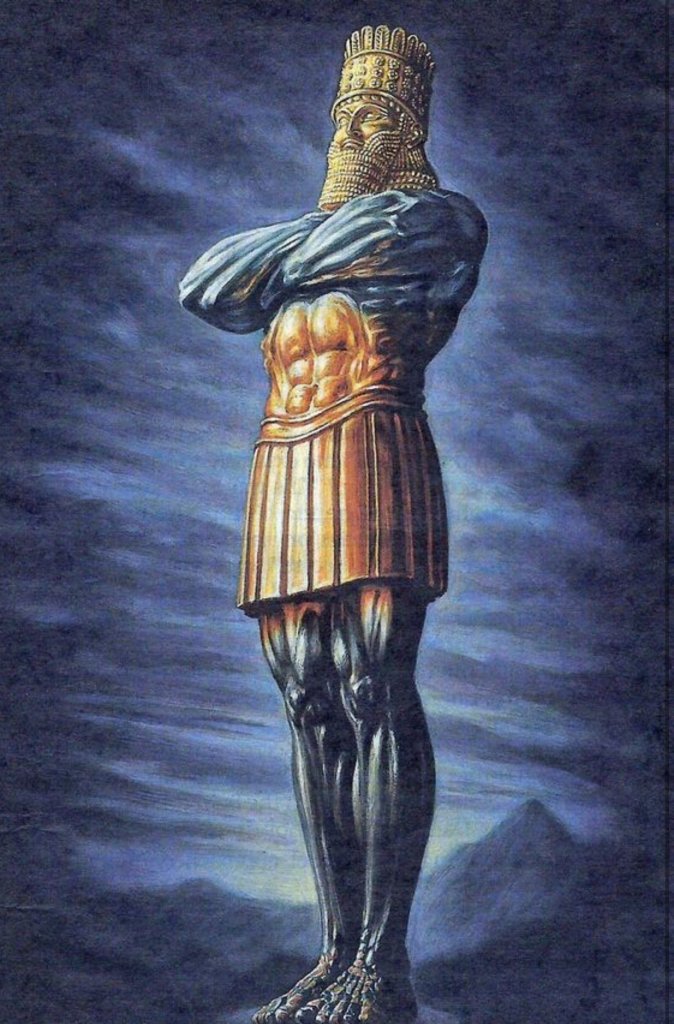

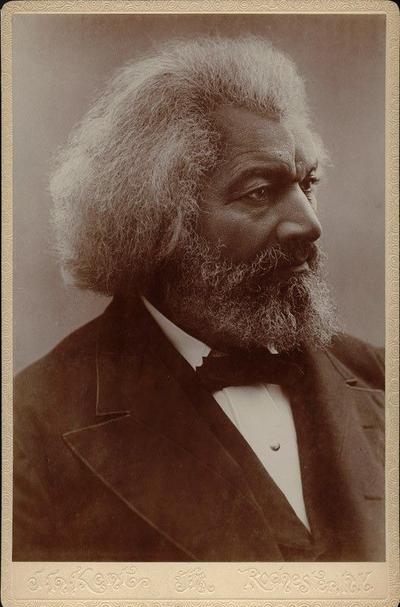


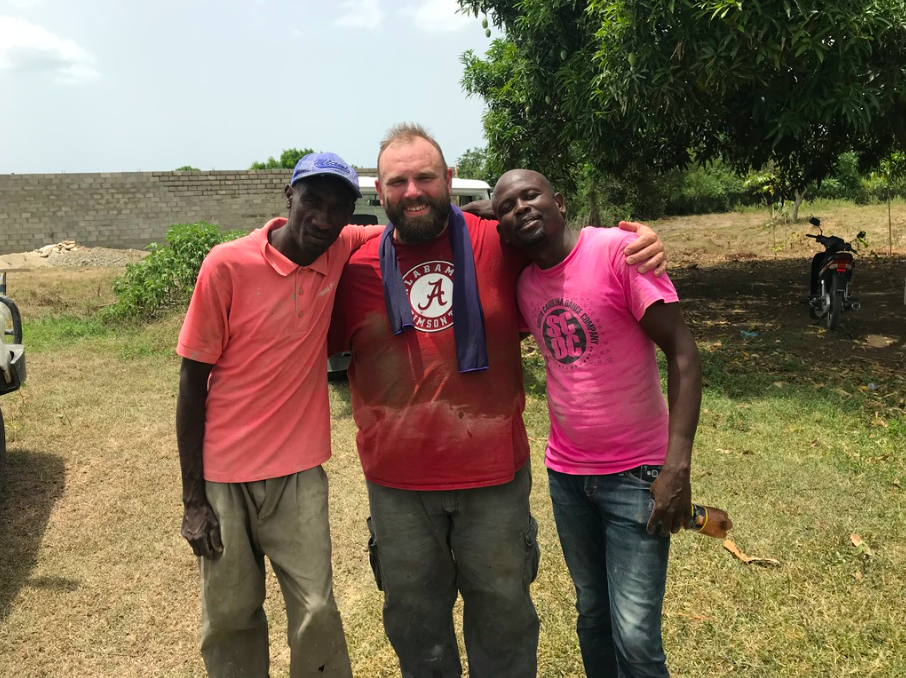
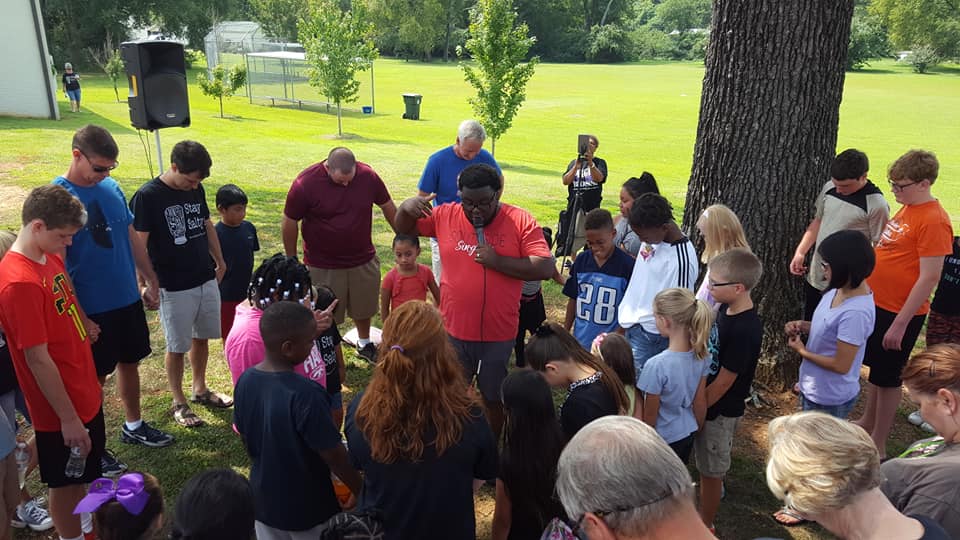
 In a time when the silliest things separate humans, let us in the church unite behind the blood of Jesus to love and forgive. The power of a changed life, and forgiveness of sins is the most powerful emancipation of all history. Being shackled by hatred, bigotry, and judgmentalism has caused more problems than the world can ever count.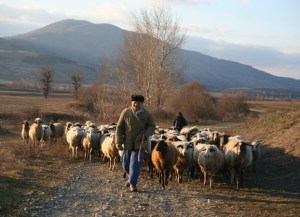





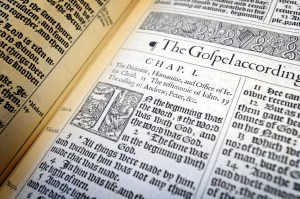


 Droo's Clues