
Education helps us through the confusion of dark days.
In light of the difficult days we’ve witnessed and the racial tensions of recent history, sometimes learning things from another person’s point of view not only changes the perspective, but completely changes our perception of truth. Rarely does it fortify what we already believed by our pre-judged views. I hope you’ll bear with me as I flesh some things out.
I want to tell you, I find that quite honestly the Biblical take on things like interpersonal relationships is so other-worldly that it comes across as radical. Discipleship is never passive, and undoubtedly never legalistic. The M/minor prophets spoke rampantly about the true religion of authentic following of God’s precepts. The prophet Zechariah said, “This is what the Lord Almighty said:
‘Administer true justice; show mercy and compassion to one another. Do not oppress the widow or the fatherless, the foreigner or the poor. Do not plot evil against each other.’ “But they refused to pay attention; stubbornly they turned their backs and covered their ears. They made their hearts as hard as flint and would not listen to the law or to the words that the Lord Almighty had sent by his Spirit through the earlier prophets. So the Lord Almighty was very angry. (Zechariah 7:9-12, CSB)
The Lord was very angry. This was written to people who knew the way God felt about ethics and compassion. I think people are the most REAL to people who they perceive don’t matter, don’t you? It’s the disenfranchised that will most likely receive the REAL actions of people based on who they are. Real Biblical discipleship is a radical type of discipleship that submits the heart to another’s Lordship; Yahweh is the one we serve due to the obedience and sacrifice of Jesus. We followers of Jesus must be ones whose allegiance is to Him first, and never subservient to a political party, a church platform, or a regional or cultural more. Our allegiance is to the God above, who created all things as good, and desires the unity and communion of all people’s hearts and minds.
Very often, what happens is that folks on one political/social POLE or the other key in on caveats; “but what about abortion?” “…the breakdown of the home?” “What about gays and lesbians?” “…submission to the government?” “…corporate greed & excessive taxes?” “…the lawbreakers, looters, and rioters?” These are of course important concerns that need to be addressed. Those could all be rabbit trails; but let’s stay on point toward learning from a different point of view. I find in scripture that Jesus often does not answer questions directly. He unquestionably had a position on any conundrum; and what that position was is sometimes crystal clear in scripture, and other times not so evident. He would often respond as any good Rabbi would do, with a response question to the questioner. “Have you not read…” or “What does the scripture say?” Or even, “Does not the law say … love your neighbor as yourself?”
I was preparing for a message to be preached on Sunday, July 5, entitled, “Independence Day: What Will You Do with Freedom?” I came across the speech made by Frederick Douglass on the topic in 1852, “What to the slave is the Fourth of July?”
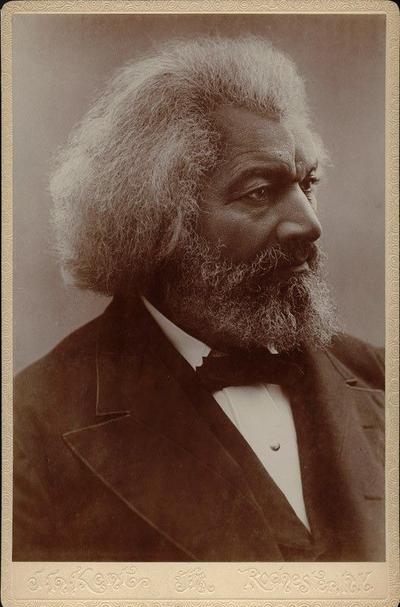
If this isn’t a shot in the arm to EVERY modern person… it can’t help but demand our attention. A former slave, an intelligent and well-read man, and a leading voice in the battle for abolition of slavery & sparking reform in law and culture.
The problem with each person’s current point of view is this; we often forget what makes now NOW are the things that happened yesterday, last week, and years before. It’s so easy for us to think in irresponsible ways that are self-centered. Everybody’s grandmother passed down recipes, instructions, and ways of doing things… EVERYBODY’S. Or Grandfather, or Dad, or Uncle… And a lot of the time, culture trickles down in the form of one-liners and over-simplified memes. So viewing the world through the lenses of a man the likes of Frederick Douglass is nigh impossible, if not for learning about him, his world, and his circumstances in early American society.
I believe that racism is in fact, systemic; but by that, I don’t mean that it is unanimous. Or that people are always hateful toward those of other racial backgrounds. I simply mean that it exists in ways that people don’t anticipate, and don’t necessarily mean for it to exist. People do it all the time when they classify others with observations in which they lump people into groups. But I also believe that it can be overcome if we WANT to overcome it. If we have a humble spirit and understand we’re all broken vessels, and by His stripes we are ALL healed. No one over another…
We all, like sheep, have gone astray,
each of us has turned to our own way;
and the Lord has laid on him
the iniquity of us all.
(Isaiah 53:6, CSB)
Why can’t we let this die? Because we don’t know each other. Community destroys racism. And I believe the best community possible is that of the body of Christ.
In addition to reading the following books, I’ve been watching a few movies (based on the books) written by either emancipated slaves, or runaways. We often just can’t identify with the world because we’re absorbed with the NOW, and we rail or lash out against the people and the past with unkind & insensitive remarks like, “nobody owns slaves today!”, or “What did I do to you?”, or “Civil rights has been the LAW for 50 years.”, etc.
Before long when we learn history, people may stop insisting, “it’s my southern heritage, it’s just a flag of pride,” and they’ll begin to ask questions of themselves; yes, but at what cost? What DID this flag mean? What DID it stand for? How does my pride hurt the community of God?
We can preserve our southern manners, culture, and colloquialisms in some other way.
The quote below is helpful, because most modern day folks (white or black) don’t have the foggiest notion of what life was like in the 1850’s in America. Please just try to read and have some heart for the past.
From Frederick Douglass’s 1852 speech given at Rochester, NY Corinthian Hall
What, to the American slave, is your 4th of July? I answer: a day that reveals to him, more than all other days in the year, the gross injustice and cruelty to which he is the constant victim. To him, your celebration is a sham; your boasted liberty, an unholy license; your national greatness, swelling vanity; your sounds of rejoicing are empty and heartless; your denunciations of tyrants, brass fronted impudence; your shouts of liberty and equality, hollow mockery; your prayers and hymns, your sermons and thanksgivings, with all your religious parade, and solemnity, are, to him, mere bombast, fraud, deception, impiety, and hypocrisy — a thin veil to cover up crimes which would disgrace a nation of savages. There is not a nation on the earth guilty of practices, more shocking and bloody, than are the people of these United States, at this very hour.
This criticism begs the question: what was the church doing while the racism of its day continued on a daily basis, and slavery was justified as a necessary evil of its economy. Knowing the past helps us articulate things now, and here’s one takeaway: the church needs to stop waiting and watching. It should be a visible island within a cultural sea of chaos. One that exemplifies a way forward navigating cultural differences and bringing together people of all races and cultural backgrounds. We are after all, a “royal priesthood” that is the only legitimate means of redemption and peace.
Though the preceding paragraph was a scathing rebuke of the evil of slavery, Douglas didn’t “live” there… his concluded his speech like this:
Allow me to say, in conclusion, notwithstanding the dark picture I have this day presented of the state of the nation, I do not despair of this country. There are forces in operation, which must inevitably work the downfall of slavery. “The arm of the Lord is not shortened,” and the doom of slavery is certain. I, therefore, leave off where I began, with hope. While drawing encouragement from the Declaration of Independence, the great principles it contains, and the genius of American Institutions, my spirit is also cheered by the obvious tendencies of the age. Nations do not now stand in the same relation to each other that they did ages ago. No nation can now shut itself up from the surrounding world, and trot round in the same old path of its fathers without interference. The time was when such could be done. Long established customs of hurtful character could formerly fence themselves in, and do their evil work with social impunity. Knowledge was then confined and enjoyed by the privileged few, and the multitude walked on in mental darkness. But a change has now come over the affairs of mankind. Walled cities and empires have become unfashionable. The arm of commerce has borne away the gates of the strong city. Intelligence is penetrating the darkest corners of the globe.
What fascinating grasp of language, and a remarkable spokesman.
I love what the apostle John has to say about loving one another:
Anyone who claims to be in the light but hates a brother or sister is still in the darkness. Anyone who loves their brother and sister lives in the light, and there is nothing in them to make them stumble. But anyone who hates a brother or sisteris in the darkness and walks around in the darkness. They do not know where they are going, because the darkness has blinded them.
(1 John 2:9-11, CSB)
I beg you all – Christians or non-Christians alike – expose yourself to history to understand it. Once we begin to understand the historical context for people, we will start to understand what makes our TODAY the way it is. Love one another, for love is of God (1 John 1).
Please think carefully about what you write, or say, or post, or share. The church is not some nebulous entity that we have a membership card for, but we ARE that which we seek to be… the church. Do we reflect our savior & creator, Jesus? I beg you to think critically about issues. On the other end of the line is a human being, with a life, and history, and aspirations and dreams. Be Christ-like, for God’s sake.
For more info, and thought-provoking material:
Books:
- A Sin By Any Other Name, Robert W. Lee (great nephew to THAT Robert E. Lee)
- Just Mercy, Bryan Stephenson
- Reconstructing the Gospel, Jonathan Wilson-Hartgrove
- The Civil War as a Theological Crisis, Mark A. Noll
- 12 Years a Slave, Solomon Northup
Movies:
- 12 Years a Slave
- Mississippi Burning
- Just Mercy
- Amistad
- A Time to Kill
- Selma
- Harriet
- Remember the Titans (fun, but real history)
- Glory Road
- Free State of Jones
- The Patriot
- the list goes on, and on, and on.
 Droo's Clues